
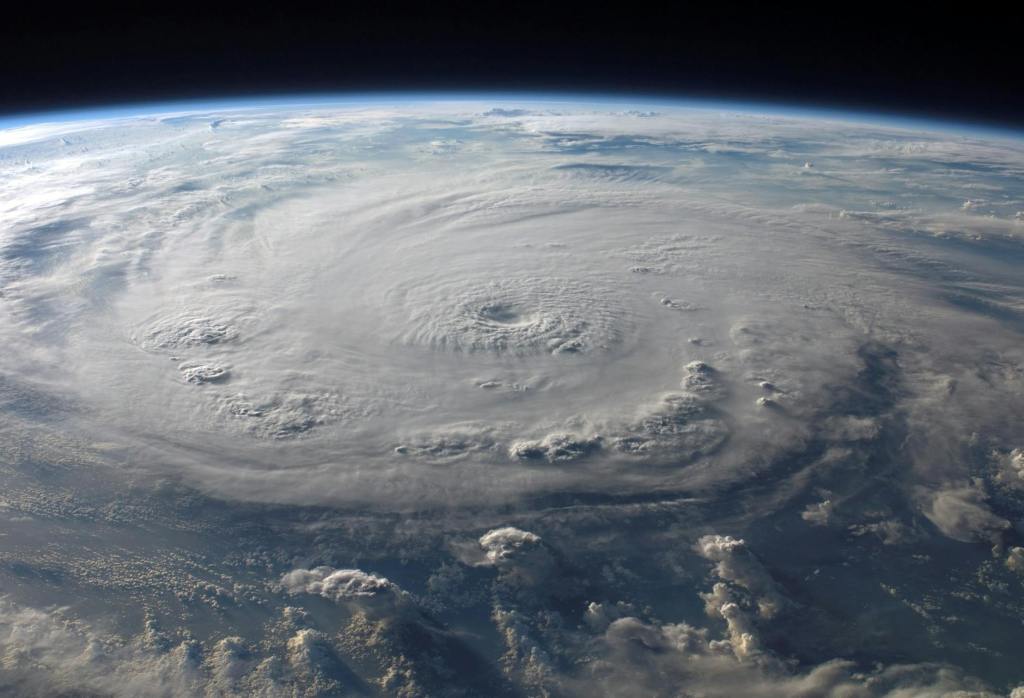
Budget cuts are on the headlines of just about every field in America right now, but above all in meteorology. How will recent funding changes impact forecasting accuracy, and will we even see these effects in the short run, or will the next generation be predisposed to worse forecasts? NOAA’s budget was initially cut by 2.2 billion dollars, but the most recent updates, although still major, show only around 400 million dollar budget cut being drafted in legislation. Understanding how this new budget will affect our ability to respond to and predict severe weather events is critical.
Differences in Ideals
Recent budget cuts that have been proposed by the administration and approved in some degree have one underlying mission, to improve government efficiency and allocation of resources by only keeping the aspects deemed “necessary” running; this classification of “necessary” and “unnecessary” are decided in someway by the administration using the information and data at their disposal. With people such as Senate Appropriations Committee’s Subcommittee Chair Jerry Moran stating, “bill fully funds the [NWS] for purposes of employing people who work” and other members like Senator Brian Schatz stating, “It’s clear to me that this administration has already made the judgment that the National Weather Service has too many human beings.” This methodology is not negative in any sense and, in many ways, can improve how cost-effectively the government is run. An issue arises when a bureaucratic organization evaluates scientific organizations. When administrations evaluate organizations like NOAA in a corporate sense, many crucial aspects can be easily seen as superfluous or unnecessary. For example, spending 39.1 million dollars on weather research to the administration may seem excessive and even wasteful if no groundbreaking findings have been made in the fiscal year. However, it is incremental research over time, even tens of years, and takes vast amounts of resources that eventually lead to breakthroughs which profoundly impact society for the better. Thus, limiting research in the name of bureaucratic efficiency in the long term only makes society worse off and less efficient.
Impact
Reducing the budget of NOAA has many adverse effects, as it directly reduces the amount of research NOAA can conduct. This negatively impacts our ability to understand and therefore respond to weather events currently, but even more so in the future as our world continues to change in ways we cannot understand. Reduced funding may also limit NOAA’s ability to gather data, which, if not recorded, is lost forever over time. This data is crucial for training models to prevent catastrophic severe weather outcomes, leading to lasting repercussions. Quantifying the impact of these budget cuts on society is challenging, as even slight improvements in data, models, and understanding could potentially save countless lives and property from future hurricanes, wildfires, or severe weather events. So, quantifying the loss from these budget cuts is similar to the experience of insurance; there is always a low chance of an accident, but if one occurs, the difference between being insured and not is stark.
Solution
The solution isn’t necessarily to immediately refund NOAA or drive more funding toward it, as unnecessary or excess spendings still definitely does exist within the research field like any other body, however currently there is no proper way for external groups to differentiate “good” spending from “bad,” and there needs to be a way to do so. One possible set of solutions proposed by Reed et al. involves standardizing new benchmarks to measure the impact of research. This is achieved by using statistical models on the research itself to quantify impact, employing logic models, theory of change, and tracking the impact of research with benchmarks and trend analysis in public sectors. New solutions like these are critical for better collaboration between the scientific and governmental organizations of the world, so that wefficiency can be maximized while also moving forward in science.
 The Green Analysis
Leave a comment